 Sexual assaults
A FBI report shows that the number of rapes is in sharp decline in the United States, especially thanks to DNA research.
This news item was published last November in the USA Today magazine: according to a FBI report, the number of rapes in the United States reached in 2008 its lowest level in twenty years. With 89,000 complaints in 2008, one stands indeed at 29 rapes per 100,000 inhabitants. Nearly 110,000 rapes had been recorded in 1992, i.e. 43 rapes per 100,000 inhabitants…
The crime figures for 2009 do show that the drop continues since there were 3.1% fewer complaints for rape last year in the USA compared with the previous year. The reasons put forward by the report are multiple. They’re chiefly societal: Federal authorities have indeed strongly encouraged the police and the courts to deal with rape as a crime, to show greater consideration for the victims, and to have a more professional approach to investigations. A 1994 Federal law thus released $1.6 billion in credits to further medico-judiciary initiatives in rape cases… Lodging a complaint for rape has gradually become normal practice, what for a time drove up the statistics… but also made it possible to multiply arrests and so in the end to bring their numbers down.
In France too…
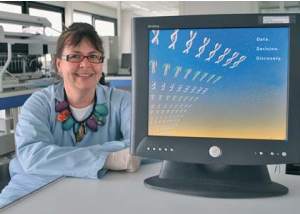 DNA analyses obviously have something to do with this situation: by providing an additional element of proof, they allow investigators to rely no longer only on the vic tims’testimonies. And there fore the victims feel reassured by the fact that things no longer rest solely on their words. The time of trials in which the victim’s reputation was questioned is thus over! The effectiveness of this system also rests on the possibility of comparing the data of the samples taken with those in a database of genetic prints, such as the FNAEG in France. The fact is that quite a few rapists are serial offenders and are thus quickly unmasked, having been involved in older cases and put on file on these occasions. “We’re observing the same trends here in France,” IGNA expert Marie-Gaëlle Le Pajolec points out. “Techniques have become highly effective as regards genetic analysis of sperm, but also in looking for contact traces left by an assailant. The prospect of being unmasked by one’s DNA makes rapists think! The FNAEG’s increasing importance also contributes to this situation.” Today, this database gathers together some 1.5 million profiles…
From IGNA – Newletter July 2010